In Hilo, hoop steel can go in the County’s free scrap bins, but a concrete base costs per ton at the reload facility. Second Life Play lowers your hoop and agrees the footing plan first.
Hilo hoop removal, with the footing question settled first
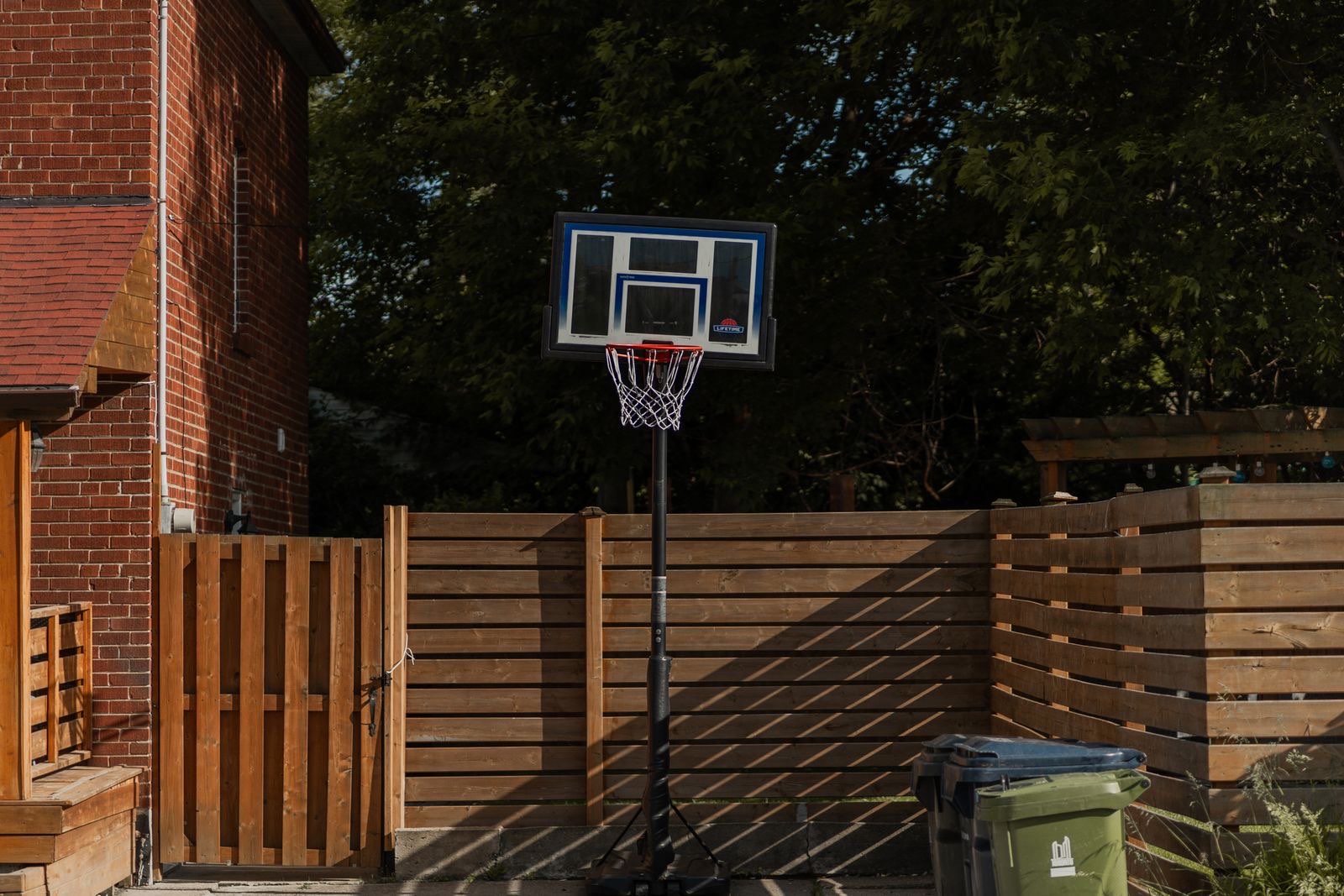
Hilo homeowners often find the pole is the easy part, since the County runs free scrap metal bins for household metal, while the concrete base is billed by the ton at the East Hawaiʻi Reload Facility, which refuses cash. Our team lowers the goal, removes the backboard and rim and carries pole and parts to the truck. Many homeowners prefer to cut the post at grade and leave the concrete; we confirm that choice in the quote. Send photos of the base, the board and any trees or lines overhead.
Often, yes. Leaving it or cutting the post flush avoids a paid C&D trip. If you want it out, tell us when you request the quote so the plan includes it.
We look for more play. Then the right disposal route.
We try to rehome suitable equipment before recycling accepted materials or responsibly disposing of the remainder. Condition and recipient acceptance determine what is possible.
Sample Second Life Play prices in USD, not live offers or competitor quotes. Assumes one residential item, level ground, clear ground-floor access and ordinary hardware. Includes stated dismantling, haul-away and disposal. Difficult access, severe corrosion, unusual anchors, excavation beyond the stated scope, repairs and any applicable tax need confirmation. No payment or booking is taken.
A BETTER QUOTE STARTS HERE
Three photos. Fewer surprises.
Include the item, its condition and the way out. Please keep children, faces and personal information out of your photos.
1The whole hoop and backboard
2The base, wall bracket or concrete footing
3Make/model label, damage and vehicle access
RATHER DO IT YOURSELF?
Totally fair. Here’s how to do it right.
If you’d rather take the basketball hoop apart and find it a new home yourself, here’s what we’d tell a friend in Hilo: where to donate it, what the local collection and drop-off rules allow, and what to do with anything that can’t be reused.
Photograph it assembled before you start. Recipients want to see what they’re getting.
Bag and label the hardware for each section as it comes apart.
Be honest about rust, rot, tears and missing parts. Unsafe equipment shouldn’t be passed on.
Call before you load. Large outdoor items are usually accepted case by case.
Hilo’s best bet for a wooden set is the Habitat ReStore on Iolani Street, which screens donations and wants lumber at least 4 feet long without fasteners. Submit photos through its online form first; the County reuse center at the transfer station is worth a call too.
Building materials, complete hardware, tools and undamaged furniture. Refuses lumber under 4 ft or with screws, nails or damage, rusted materials, baby items and incomplete items.
Tip: Use the online form with photos before driving over; open Mon–Fri 9–4 and usually closed the first Wednesday of the month.
County reuse center open daily 8–4; the County page names only usable latex paint and reusable newspaper as special materials and gives no general item list.
Tip: Call 808-498-7916 before loading anything; the page doesn’t say whether outdoor play items are taken.
Sporting equipment and balls are on Goodwill Hawaii’s wanted list; outdoor swing sets, exercise machines and construction material are on its refused list.
Tip: Don’t bring swing-set parts. Small items such as balls fit; donations are taken daily 9–6 at the new Makaala Street store.
Checked online on October 9, 2026. Donation sites decide what they accept and can change their rules. They’re listed for your own drop-off and aren’t affiliated with Second Life Play. Don’t want to haul it? We’ll take it apart and look for a new home for you.
BEFORE YOU HAND IT OVER
Agree on the next home before teardown.
Salt air and rain show up first at a hoop’s ground line, so inspect the pole base before offering it. A portable hoop with a sound base or an in-ground system that unbolts may suit another family; list it on Freecycle Hilo with the board size. If the pole is rusted through, the free scrap bins are the practical next step.
Recipient acceptance must come first. Organizations listed here aren’t affiliated with Second Life Play, so confirm acceptance with them directly. A photo review does not certify equipment for use.
A hoop in Hilo divides cleanly between free and paid destinations. The steel pole, arm and rim are household scrap, which the Hilo Recycling & Transfer Station takes at no charge in its scrap metal bins Monday through Saturday, 8 a.m. to 4 p.m.; the County excludes commercially generated metal there. The backboard and plastic parts go with household rubbish. The footing is different. Concrete counts as construction and demolition debris, and the East Hawaiʻi Reload Facility at 1651 Hoʻolaulima Road charges a $26 per ton disposal fee plus $128 per ton tipping, accepts no cash and limits C&D loads to 5 cubic yards. The same County page elsewhere says only the West Hawaiʻi landfill takes C&D debris, so confirm by phone before breaking out a footing. Because there is no County curbside service, none of this can be left at the street for pickup.
Breaking out a hoop footing means a per-ton charge at the reload facility. Cutting the post at grade and leaving the concrete avoids the trip if that suits the yard.
We think we’re the best at this. Go ahead and compare.
We think we’re pretty great at removing old play equipment and finding it a second home. We’d even dare say the best: it’s what we do. But it’s your yard and your call. If you’d like to compare, here are other companies that advertise basketball hoop removal around Hilo. Give them a call. We’re confident you’ll choose us.
Independent businesses, not Second Life Play crews or affiliates. Descriptions reflect what their own pages advertised when checked; confirm your address, equipment and full scope with them directly.
Hilo collection & drop-off questions.
Is there a charge for dropping a steel hoop pole in Hilo?
No. The County says there is no charge for its scrap metal bins. Metal generated by businesses, government or nonprofits isn’t accepted.
How big a load of footing concrete will the reload facility take?
The reload facility section caps C&D loads at 5 cubic yards, described as a standard pickup with an 8-foot bed filled to the top of the cab. Another section names the West Hawaiʻi landfill as the only C&D site, so call first.
Reviewed online on October 16, 2026. A published listing confirms what an organization advertises; it does not confirm today’s appointment availability or acceptance of your exact equipment.